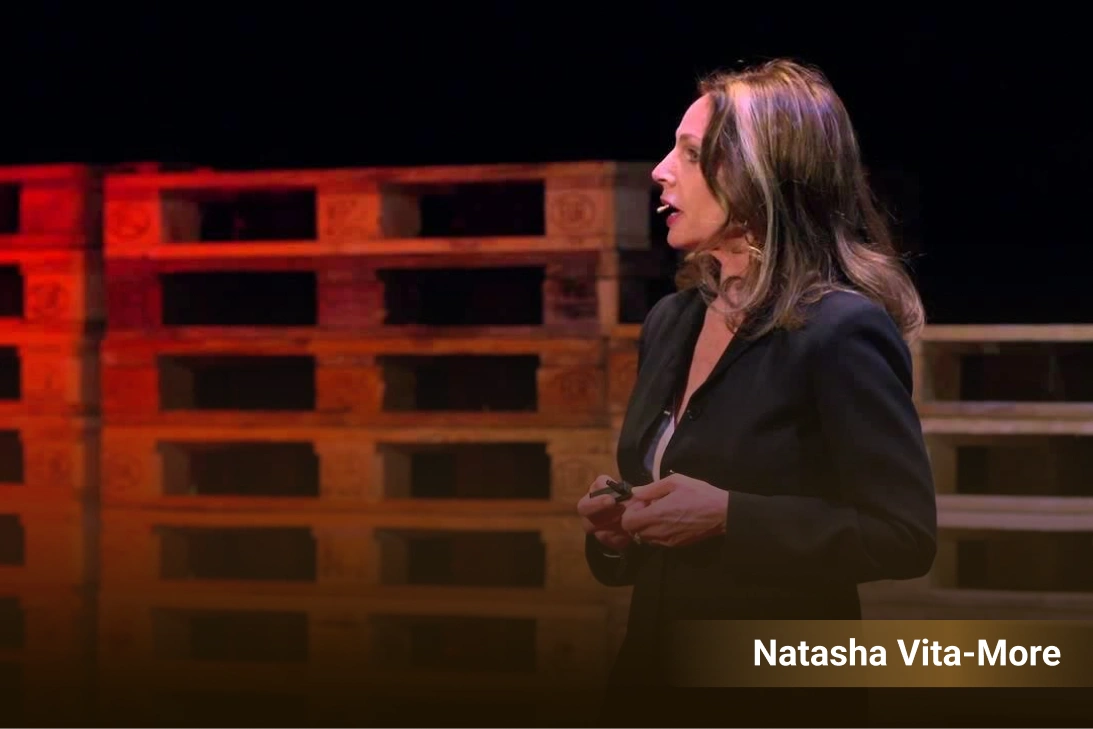
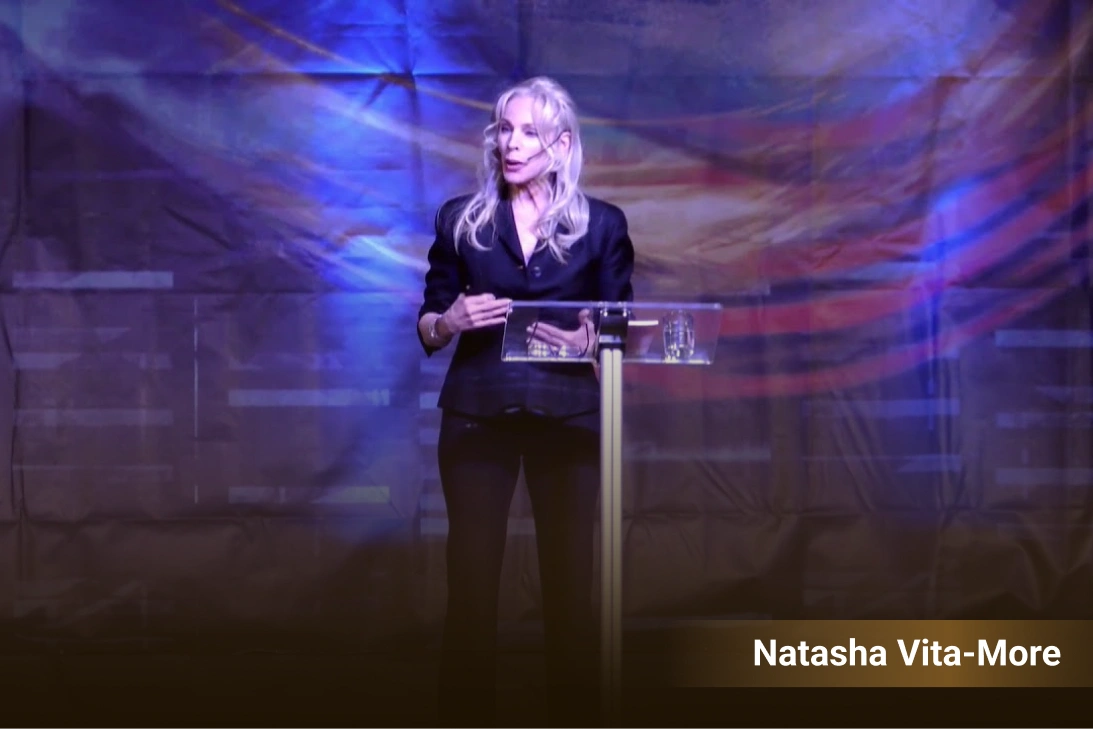
Dr. Natasha Vita-More is an award-winning creative, futurist, and thought leader whose
work focuses on humanity’s next stages of development, with artificial intelligence as a
tool, companion, and integrated partner in human flourishing. Her career bridges
philosophy, science, design, and culture, advancing a rigorous, human-centered
approach to emerging technologies. Vita-More is widely recognized for conceptualizing
the first future human prototype, a landmark work that reframed how society imagines
the evolution of the human body and mind. This early innovation established her
reputation for translating complex scientific possibilities into coherent, ethical, and
culturally resonant frameworks.
Vita-More’s research and innovation span artificial intelligence, cognitive augmentation,
longevity science, and human physiology. She achieved a discovery in neuronal
memory preservation and pioneered the first AI–nanorobot body prototype, contributing
foundational ideas to the field of human–AI integration. Her work consistently
emphasizes evidence-based science, ethical responsibility, and the cultivation of
humane values alongside technological progress.
Central to her thinking is the view that advanced AI will not merely optimize intelligence,
but will reshape the human experience itself—supporting new cognitive pathways,
deeper empathy, and more reflective forms of agency. Rather than positioning
technology as a replacement for human capacities, Vita-More frames AI as a catalyst for
enhancing judgment, resilience, and moral imagination. In this vision, meaningful
human–AI integration offers the possibility of addressing long-standing psychological
and social constraints, enabling individuals and societies to evolve beyond inherited
limitations.
Dr. Vita-More currently serves as faculty at Geneva College Longevity Science and as
Distinguished Senior Fellow at the Center for Future Mind. She is a former Filmmaker-
in-Residence at the University of Colorado and has been recognized by leading cultural
and scientific institutions, including the Brooks Memorial Museum and the U.S. Space &
Rocket Center, where she was awarded Space Camp Wings.
Her work and ideas have been featured in The New York Times, Vogue, Politico,
Forbes, and Wired, among many other publications and televised documentaries. She
has been named among the Top 50 Women in Longevity, and her creative and scholarly
contributions have been honored internationally at the Women in Video Festival,
Moscow Film Festival, Telluride Film Festival, London Museum, Vigeland Museet, the
Louvre Museum, and the Brooks Memorial Museum.
Across disciplines and decades, Natasha Vita-More’s work asks—and rigorously
investigates—a question that remains central in an age of intelligent machines: how can
humanity evolve wisely, preserving what is most human while expanding what is
possible?